
Lesser-Known Ways Concrete Companies Can Help You
When most people think about concrete companies, they picture driveways, sidewalks, foundations, or patios. However, concrete professionals can offer much more, from improving existing surfaces to creating customized outdoor features that add function, durability, and visual appeal.
Whether you own a home or commercial property, exploring these lesser-known services can help you make smarter choices. Sometimes a repair, adjustment, or upgrade can provide more value than complete replacement.
Improving Existing Surfaces With Leveling
Uneven concrete can be more than an eyesore. A sunken driveway, patio, walkway, or floor can create tripping hazards, collect water, and become harder to use. Instead of immediately assuming the entire surface needs replacement, property owners can determine whether leveling or lifting may be a practical alternative.
Concrete companies may use different leveling techniques depending on the surface condition, underlying soil, and amount of movement. Some methods involve injecting specialized materials beneath a slab to raise it toward a more usable position. This can sometimes address the problem while preserving much of the existing concrete.
Cost is another reason to investigate leveling before choosing replacement. According to HomeGuide, concrete leveling can cost approximately 25% to 50% less than completely replacing the concrete. Actual pricing depends on factors such as accessibility, surface size, and the cause of settlement, but potential savings make a professional evaluation worthwhile.
Creating Custom Features With Concrete
Concrete does not have to look plain or purely functional. Property owners can use different textures, colors, patterns, finishes, and shapes to create features that complement an existing architectural style. This makes concrete a flexible material for both practical and decorative projects.
A standard patio, for example, can be transformed with stamped patterns that resemble stone, brick, slate, or other materials. Walkways can incorporate decorative borders, while outdoor seating areas can feature curved edges or custom shapes. Concrete companies can also help property owners select finishes that coordinate with landscaping, siding, masonry, and other exterior elements.
The possibilities extend beyond large surfaces. Custom steps, planters, benches, outdoor counters, retaining elements, and decorative walls can all give a property more character. Instead of treating concrete as something that simply fills a space, homeowners can make it part of the overall design. This approach can create a cohesive appearance without relying on numerous unrelated materials.
Designing More Functional Outdoor Spaces
A concrete project can do more than improve appearance; it can change how people use a property. An underused section of a yard might become a seating area, outdoor kitchen foundation, entertainment space, or comfortable walkway. Thinking about how people move through and use a property can reveal opportunities that are easy to overlook.
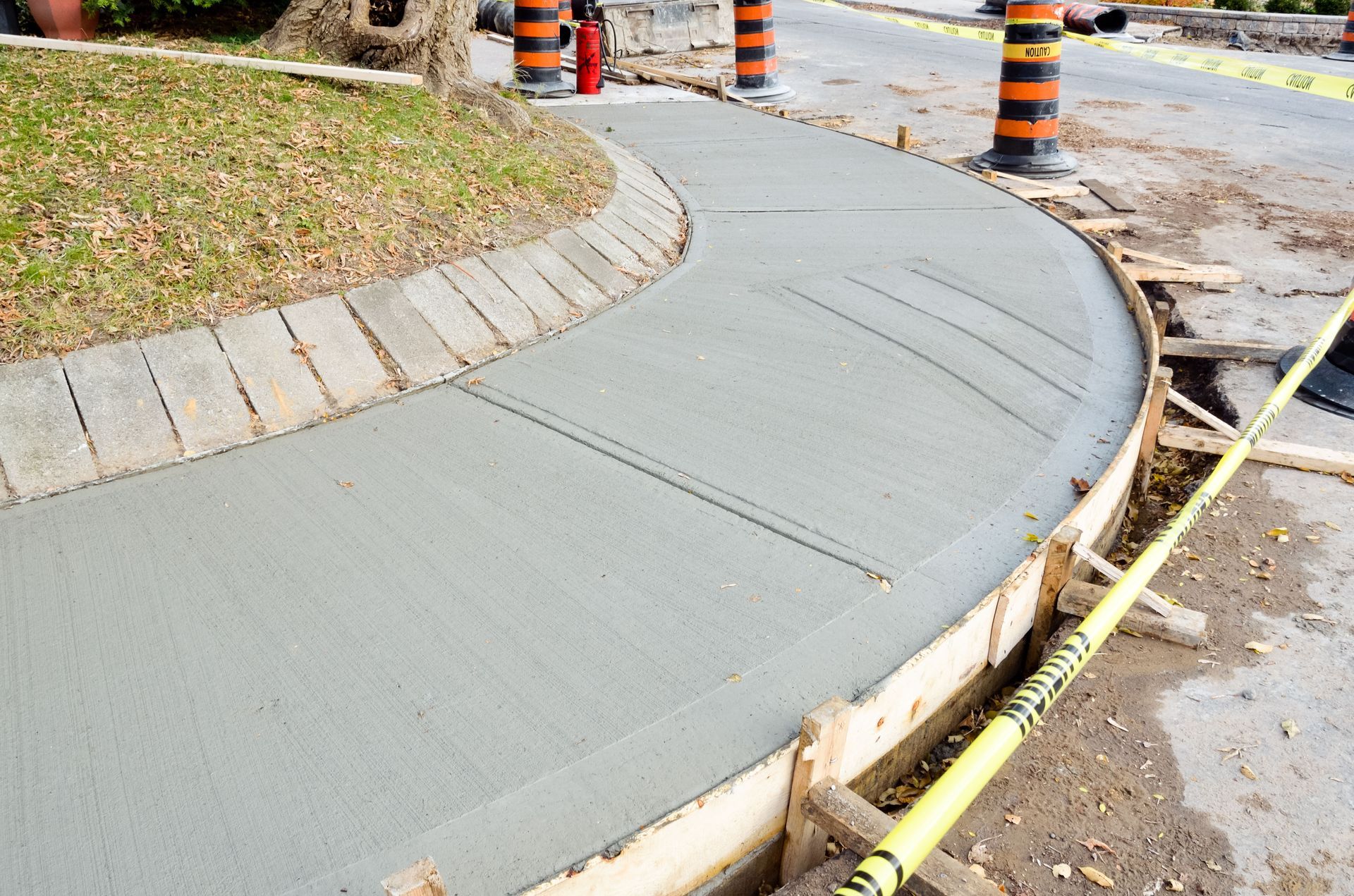
Concrete companies can help shape outdoor surfaces around practical needs, including access points, drainage, furniture placement, and traffic patterns. For example, a walkway can provide a safer route between a driveway and entrance rather than simply following the shortest path. A patio can also be designed around how a family plans to use it instead of relying on a generic layout.
Commercial properties can benefit from the same approach. A concrete surface might support outdoor customer seating, pedestrian circulation, loading areas, or defined sections of a larger property. When design starts with functionality, the finished project is more likely to remain useful rather than becoming an attractive space that rarely gets used.
Enhancing Safety With Repairs and Maintenance
Small concrete problems can be easy to ignore, particularly when they do not immediately prevent someone from using the surface. Cracks, uneven joints, surface deterioration, and minor settlement can become larger concerns when water, weather, traffic, and repeated use continue to affect the area. Addressing these issues earlier can help prevent manageable problems from becoming extensive repairs.
Professional maintenance may include repairing cracks, addressing damaged joints, improving drainage around concrete, or applying protective treatments. The appropriate service depends on why the deterioration occurred. A crack caused by settlement, for example, may require a different solution than a shallow surface crack caused by environmental exposure.
A professional evaluation can be especially useful in these situations. Rather than focusing only on how damaged concrete looks, concrete companies can assess whether an issue appears cosmetic, functional, or potentially more serious. That distinction can help property owners choose an appropriate solution and avoid paying for work that does not address the underlying problem.
Reducing Maintenance With Protective Treatments
Concrete is durable, but durable does not mean maintenance-free. Outdoor surfaces can face moisture, deicing products, oil, dirt, sunlight, temperature changes, and everyday traffic. Over time, these conditions can affect both the appearance and performance of concrete.
Protective sealers and coatings can provide an additional layer of defense when appropriate for the surface and environment. Depending on the product, a treatment may help reduce moisture penetration, staining, surface wear, or exposure-related damage. Some finishes can also enhance the existing color or appearance of decorative concrete.
Maintenance is not limited to applying a product once and forgetting about the surface. Property owners should understand how often a treatment may need attention and what cleaning practices are appropriate. Concrete companies can help identify maintenance strategies based on whether the surface is a driveway, walkway, patio, garage floor, or commercial area.
Improving Drainage and Water Management
Water is one of the most important factors to consider when planning or maintaining concrete. Poor drainage can allow water to collect near slabs, contribute to soil movement, or accelerate surface deterioration. In some situations, improving how water moves around a concrete surface can be just as important as repairing the concrete itself.
Professionals can evaluate the slope and surrounding conditions to identify potential drainage concerns. Depending on the property, solutions might involve adjusting grading, improving runoff pathways, modifying a surface layout, or incorporating drainage features into a new project. Permeable concrete may also be considered where allowing water to move through the surface is appropriate.
Good water management can provide benefits beyond the concrete itself. Directing runoff away from structures can help protect surrounding landscaping and reduce areas where standing water develops. By considering drainage during planning, property owners can address a common source of problems before it creates more extensive maintenance demands.
Planning Projects With Long-Term Value
One of the most overlooked ways
concrete companies can help is by providing guidance before construction begins. Property owners may know they want a new driveway, patio, walkway, or slab without knowing which design, material, finish, or installation approach best fits the property. A thoughtful planning process can turn a general idea into a project with a clear purpose.
Professionals can discuss expected traffic, soil conditions, drainage, climate, maintenance requirements, aesthetics, and budget. They may also identify potential issues that property owners could have difficulty recognizing independently. This type of planning is particularly valuable when a project connects to existing structures or surfaces.
The goal is not simply to create something that looks good on installation day. A well-planned concrete project should make sense for the property's intended use and remain practical over time. By discussing immediate goals alongside long-term expectations, property owners can make more informed choices about materials, layouts, finishes, and maintenance.
Concrete has a reputation for being a straightforward construction material, but its potential goes much further. Leveling existing surfaces, creating custom features, improving outdoor functionality, repairing damage, applying protective treatments, managing drainage, and planning for long-term performance are ways professional concrete services can add value.
The most useful project is not necessarily the biggest one. Sometimes a focused improvement can make a surface safer, more attractive, easier to maintain, or better suited to the way a property is used. Taking time to evaluate available options can help homeowners and businesses avoid unnecessary replacement while making improvements that fit their needs. For professional guidance on concrete repairs, improvements, and new projects, contact Peter LaLicata & Son Cement Contractors Inc.
Share On: