
What Makes a Concrete Driveway Ideal for Hot Weather?
Hot weather can put considerable stress on outdoor surfaces, especially those exposed to direct sunlight throughout the day. Driveways must withstand intense heat, vehicle traffic, and repeated temperature changes without becoming difficult to maintain. Choosing the right paving material can make a significant difference in how well your property handles summer conditions.
A concrete driveway offers a combination of durability, stability, and design flexibility that makes it particularly well suited to warm climates. Its solid construction provides a dependable surface for everyday use while giving homeowners options for creating an attractive entrance to their properties. With proper installation and preparation, concrete can perform reliably even when summer temperatures rise.
Summer heat can affect the materials around your property in different ways, making material selection especially important for surfaces that receive hours of direct sunlight. Your driveway also needs to support the weight of vehicles while maintaining a smooth, attractive appearance. Concrete is well suited to these demands because it combines a rigid structure with practical customization options. When the surface is designed and installed correctly, it can provide dependable performance without sacrificing the visual appeal of your property's entrance.
Understanding Concrete's Heat Resistance
Handling High Surface Temperatures
One of the most important advantages of concrete in hot weather is its ability to tolerate substantial heat. According to Science Insights, concrete can withstand temperatures of approximately 570° Fahrenheit before experiencing significant strength loss. While residential driveways are unlikely to encounter temperatures anywhere near that extreme, this information demonstrates the material's considerable heat tolerance.
A concrete driveway exposed to summer sunshine may become noticeably warm, particularly when it has a darker finish or sits in an area with little shade. However, ordinary outdoor temperatures are generally well below the levels associated with significant heat-related strength deterioration. This allows concrete to remain a practical paving material even during periods of intense summer weather.
Maintaining Structural Stability
Heat can cause many construction materials to expand, soften, or become more susceptible to deformation. Concrete does not typically soften in the same way that some paving materials can under prolonged heat exposure. Its rigid structure makes it a stable driving surface even when temperatures climb.
This stability is particularly useful for properties where vehicles regularly enter, leave, and remain parked on the driveway. A properly constructed concrete surface is less likely to develop the ruts and soft spots associated with materials that become more pliable under high temperatures. Appropriate reinforcement, base preparation, and joint placement further support the driveway's structural performance.
Protecting Your Driveway From Summer Stress
Preparing the Base Properly
The performance of any concrete surface depends heavily on what lies underneath it. Before installing a concrete driveway, contractors should evaluate soil conditions, drainage, grading, and the existing surface. Unsuitable material may need to be removed before the underlying base is properly compacted.
A well-prepared base helps distribute vehicle loads and reduces the likelihood of uneven settlement. It also provides a stable foundation as the slab responds to changes in temperature. When drainage is incorporated into the design, water can move away from the driveway instead of collecting beneath or alongside the concrete, where it could contribute to long-term problems.
Managing Expansion and Contraction
Although concrete handles high temperatures well, it is not completely unaffected by temperature changes. Concrete naturally expands when heated and contracts as it cools. Repeated movement can create stress within a slab if the installation does not account for these changes.
Control joints provide designated locations where movement and cracking can occur more predictably. Contractors can also consider the driveway's dimensions, reinforcement, thickness, and site conditions when developing the installation plan. These details become especially important when a driveway is exposed to substantial daily temperature swings.
Following Proper Curing Practices
Curing is another critical consideration when installing concrete during warm weather. Concrete needs sufficient moisture and appropriate conditions as it develops strength. Excessively rapid moisture loss can interfere with the curing process and increase the potential for surface problems.
Professional concrete driveway installation helps address these concerns by selecting suitable pouring conditions and following established curing procedures. The timing of the pouring, weather conditions, slab protection, and curing practices can all influence the final result. Proper curing allows the material to develop its intended strength and durability before it is subjected to regular traffic.
Maximizing Long-Term Driveway Performance
Choosing a Practical Design
A driveway needs to perform its practical function while complementing the property's appearance. Concrete provides numerous design possibilities, allowing homeowners to choose finishes, textures, colors, borders, and patterns that suit the surrounding architecture and landscaping.
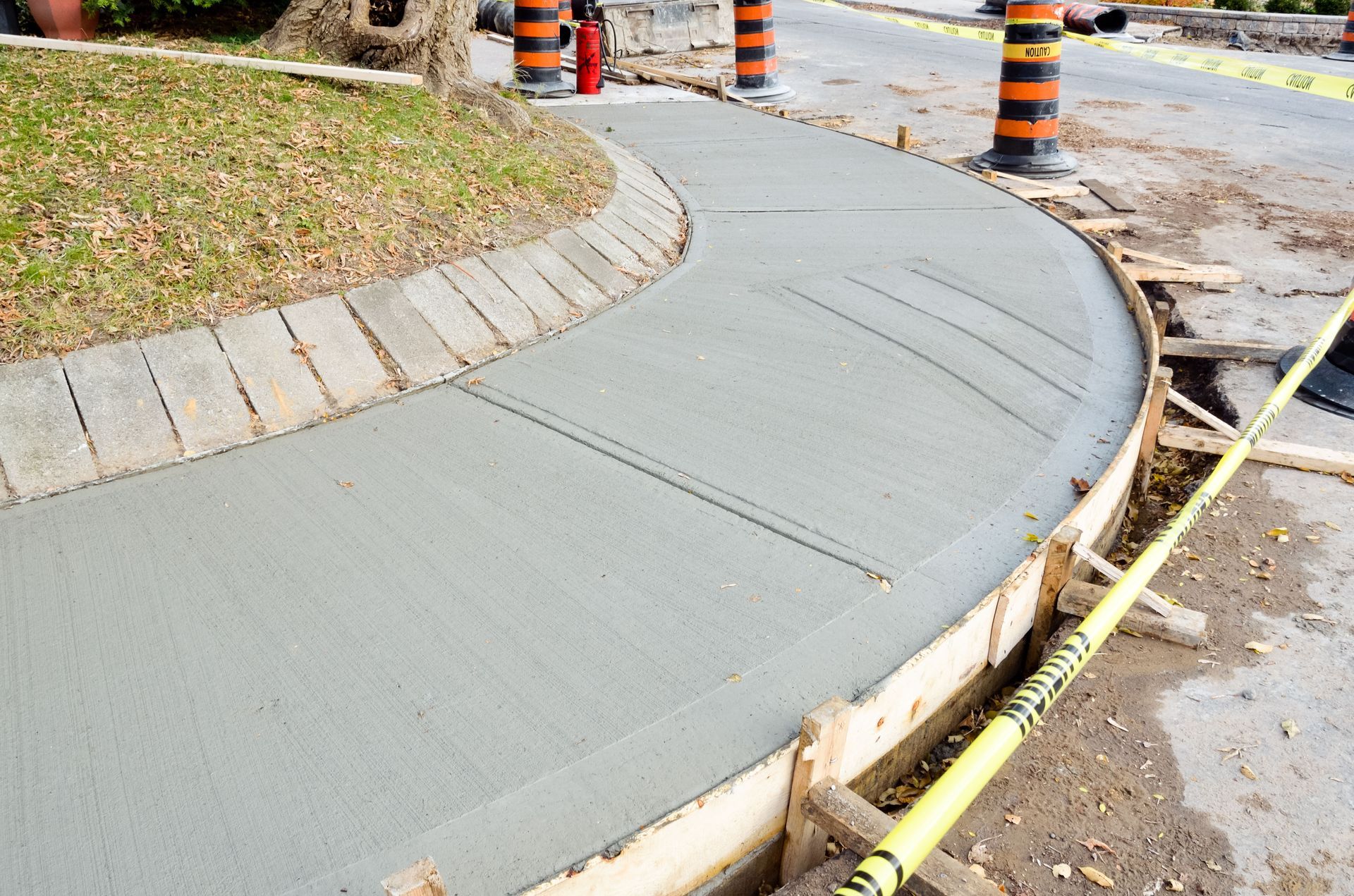
A broom finish can provide texture and traction, while decorative approaches such as exposed aggregate or stamped patterns can create a more distinctive appearance. Integral pigments and decorative borders can also help coordinate the driveway with other exterior features. The design should account for vehicle movement, available parking space, drainage, and transitions to sidewalks or entryways.
Considering Traffic and Property Use
Not every driveway experiences the same demands. A small residential driveway may primarily accommodate passenger vehicles, while a larger property could regularly see delivery trucks, work vehicles, recreational vehicles, or multiple cars. Understanding these demands helps contractors determine appropriate construction specifications.
A concrete driveway can be designed around the property's expected traffic and layout. Wider entrances, reinforced areas, larger turning zones, and properly positioned joints can improve usability while helping manage the stresses associated with frequent vehicle movement. Thoughtful planning also reduces unnecessary wear in areas where tires repeatedly follow the same path.
Maintaining the Finished Surface
Good maintenance can help preserve the appearance and performance of a concrete driveway as it is exposed to sunlight, rain, vehicle traffic, and seasonal temperature changes. Keeping the surface clean helps prevent accumulated dirt and debris from detracting from its appearance, while addressing minor problems early can prevent them from becoming more extensive.
Sealing may also be appropriate depending on the concrete's finish, exposure, and site conditions. Homeowners should follow professional recommendations regarding sealers and maintenance products rather than applying materials indiscriminately. During hot weather, it is also useful to avoid placing unusually heavy concentrated loads on areas that were not designed to support them.
A professionally installed driveway also benefits from attention to details that are easy to overlook. Proper grades help direct water away from the surface, accurately placed joints help manage movement, and appropriate reinforcement can support the slab under expected loads. These factors work together to create a more dependable outdoor surface regardless of seasonal conditions.
Concrete's ability to tolerate high temperatures is only one reason it works well for driveways. Its rigidity, design flexibility, and resistance to deformation make it a practical choice for properties that experience hot summers. When installation is supported by careful planning and appropriate site preparation, the material can provide both functional value and strong curb appeal.
For homeowners considering a new installation or replacing an aging surface, selecting an experienced contractor is an important part of the process. A professional team can evaluate the property, recommend appropriate construction methods, and create a driveway suited to its expected use and surrounding conditions. With the right approach, a new concrete driveway can provide a durable, attractive entrance that performs confidently through hot weather and changing seasons. Contact Peter LaLicata & Son Cement Contractors Inc today to discuss your project and request a free estimate.



Share On: